

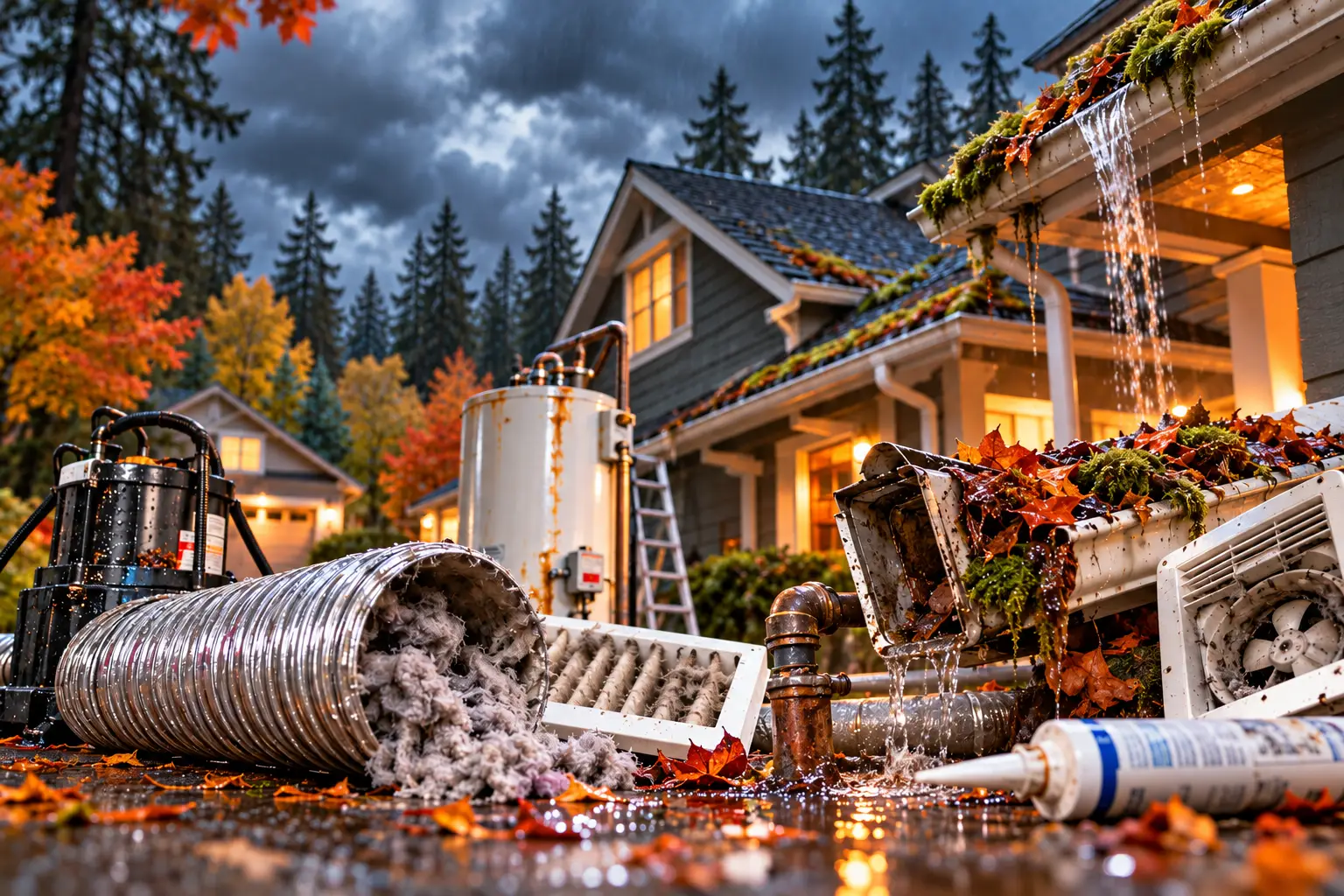
The boring shit you keep ignoring until it costs you thousands.
Owning a home is great. You get to build equity, paint the walls whatever color you want, and enjoy the satisfaction of knowing that nobody can raise your rent. Unfortunately, you also get to experience the absolute joy of discovering that a $12 part you ignored for three years has now caused $15,000 worth of damage.
Welcome to homeownership, where procrastination is expensive and water is trying to destroy everything you’ve worked for.
Here in Portland, we have some unique challenges. It rains approximately 847 days a year, moss grows on anything that stands still long enough, and our homes spend half the year getting absolutely hammered by moisture. Then summer rolls around, we get a few weeks of temperatures that make us question why we ever thought air conditioning was optional, and everything dries out.
The problem isn’t necessarily that homeowners don’t care about maintenance. It’s that most of us focus on the obvious stuff. We mow the lawn, replace light bulbs, pressure wash the driveway, and maybe clean the gutters when the neighbors start judging us. Meanwhile, the things that can actually destroy our homes are quietly plotting against us.
Let’s talk about the maintenance tasks nobody wants to do until something goes horribly wrong.
1. Your Dryer Vent Is Basically a Fire Hazard With a Laundry Schedule

Let’s start with something that could literally burn your house down.
When was the last time you cleaned your dryer vent? And no, I’m not talking about pulling the lint off that little screen after drying your underwear. I’m talking about the actual exhaust duct that runs from your dryer to the outside of your house.
If your answer is somewhere between “I don’t remember” and “What the fuck is a dryer vent?” we have a problem.
Over time, lint accumulates inside the ductwork, restricting airflow and creating a potential fire hazard. Your dryer works harder, your clothes take longer to dry, and you’re essentially operating a very expensive lint toaster.
What you should do: Inspect and clean the entire dryer exhaust system at least annually, or more frequently if needed. Make sure the exterior vent opens properly and isn’t blocked by lint, debris, or a bird that decided your house was a fantastic place to raise a family.
If your dryer suddenly takes two cycles to dry a load, don’t immediately assume it’s time to buy a new one. Check the vent first.
2. Crawl Spaces: Where Homeowners’ Dreams Go to Die

If you own a home in the Portland area, there’s a decent chance you have a crawl space. There’s also a decent chance you haven’t been down there since you purchased the property.
I don’t blame you. Nobody wants to army-crawl through a dark, damp space filled with spiders, questionable smells, and whatever the hell that noise was in the corner.
Unfortunately, ignoring your crawl space is a fantastic way to discover problems after they’ve become incredibly expensive.
Our wet Pacific Northwest climate creates ideal conditions for moisture intrusion, wood rot, mold, and pest activity. A disconnected downspout or improperly graded yard can send water directly toward your foundation. Once that moisture gets underneath your home, it can create all kinds of problems.
I’ve seen crawl spaces where insulation is hanging from the floor joists, vapor barriers are destroyed, and standing water has apparently decided to become a permanent resident.
And guess what? Buyers absolutely love discovering those things during their home inspection. Nothing gets a buyer excited quite like a $20,000 repair estimate before they’ve even moved in.
What you should do: Have your crawl space inspected periodically, particularly after heavy rainfall. Look for standing water, damaged vapor barriers, fallen insulation, plumbing leaks, pest activity, and signs of deteriorating wood.
If you notice a persistent musty smell inside your home, don’t just buy another candle. Figure out where it’s coming from.
3. That Tiny Leak Under Your Sink Isn’t Going to Fix Itself
You know that little drip under the kitchen sink? The one you’ve been meaning to fix for the last six months?
Congratulations. You might be growing mushrooms.
Small plumbing leaks are incredibly deceptive because they rarely create an immediate emergency. Instead, they slowly saturate cabinets, subfloors, drywall, and anything else unfortunate enough to be nearby.
By the time you notice the cabinet floor is soft enough to push your finger through, you’ve probably graduated from a simple plumbing repair to a miniature remodeling project.
The same goes for toilets, washing machine connections, water heaters, and refrigerator water lines. All those convenient little connections have the potential to turn your house into an indoor water park.
What you should do: Every few months, open the cabinets underneath your sinks and actually look around. Check for moisture, discoloration, swelling, and corrosion. Inspect the connections behind your washing machine and around your water heater.
Consider installing inexpensive water leak detectors near appliances and plumbing fixtures. Some even connect to your phone and alert you when something starts leaking.
It’s considerably cheaper than discovering your hardwood floors have developed their own swimming pool.
4. Your Gutters Are Not Supposed to Be a Botanical Garden

I know. I know. We just talked about gutters in our last blog about preparing for Portland’s rainy season. But this one deserves another mention because clogged gutters are responsible for an impressive amount of homeowner misery.
Especially around here.
Portland has some beautiful trees. Unfortunately, those beautiful trees spend several months dumping their leaves, needles, and assorted bullshit directly onto our roofs.
When gutters clog, water can overflow and collect near your foundation, damage fascia boards, and contribute to moisture problems inside your home.
But here’s the part people forget: cleaning your gutters doesn’t mean you’ve solved the problem if your downspouts are clogged or dumping water directly against your foundation.
You’ve essentially installed an expensive irrigation system for your crawl space.
What you should do: Clean your gutters regularly, especially during and after our fall leaf season. Check that downspouts are flowing freely and directing water away from the foundation. Inspect underground drain connections where applicable.
And while you’re up there, check for excessive moss growth on your roof. Moss retains moisture and can contribute to roofing problems over time.
If you’re not comfortable working on ladders, hire someone. Falling off your roof to save $200 is a pretty shitty financial strategy.
5. Your Bathroom Exhaust Fan Is More Important Than You Think

Let’s discuss the least glamorous appliance in your house.
Your bathroom exhaust fan.
Most homeowners never think about this thing unless it starts making a noise that sounds like a dying helicopter. But that little fan has an important job: removing moisture from your bathroom before it starts causing problems.
And in Portland, where the outside air is already trying its hardest to turn everything into a rainforest, proper bathroom ventilation is particularly important.
Over time, dust accumulates inside exhaust fans, reducing their effectiveness. Sometimes the ductwork becomes disconnected or damaged. Occasionally, someone discovers the fan was never properly vented outside in the first place.
Nothing says quality construction quite like pumping shower steam directly into your attic.
What you should do: Clean your bathroom exhaust fan periodically and make sure it’s actually moving air. Check that it vents to the exterior, not into your attic or another enclosed space.
Run the fan during showers and leave it operating for approximately 20 minutes afterward, or longer if necessary to remove the moisture.
If your bathroom mirror stays fogged up forever and your walls are constantly wet, something isn’t working properly.
And no, opening the bathroom door and hoping for the best isn’t a ventilation strategy.
6. Your Water Heater Is Quietly Planning Its Retirement

Water heaters are wonderful appliances. They sit quietly in your garage, basement, or utility closet, providing hot water for years without demanding much attention.
Until one morning you wake up, turn on the shower, and discover you’re apparently participating in a polar plunge.
Or worse, the tank starts leaking.
Traditional tank water heaters accumulate sediment over time. Depending on your water supply, usage, and equipment, that sediment can reduce efficiency and contribute to premature wear.
Temperature and pressure relief valves can also develop problems, and older tanks may eventually corrode and leak.
What you should do: Have your water heater inspected and serviced according to the manufacturer’s recommendations. That may include flushing sediment, checking the anode rod, and inspecting the temperature and pressure relief valve.
Don’t start randomly opening valves if you don’t know what you’re doing. Hot water under pressure is not something you want to experiment with.
Also, figure out how old your water heater is. If you have no idea, look at the manufacturer’s label or have a plumber help you determine its age and condition.
Replacing an aging water heater before it fails is considerably more enjoyable than replacing one after it has flooded your garage.
7. Your Sump Pump Doesn’t Give a Shit About Your Vacation Plans
Not every Portland-area home has a sump pump, but if yours does, pay attention.
A sump pump is one of those beautiful inventions that you never appreciate until the exact moment it stops working.
Its entire purpose is to collect and discharge unwanted water from beneath or around your home. When it’s functioning correctly, you probably don’t even think about it.
When it fails during a particularly enthusiastic Oregon rainstorm, however, things can get interesting.
And by interesting, I mean potentially expensive.
The worst part is that sump pumps tend to reveal their problems when they’re needed most. A stuck float switch, clogged discharge line, power outage, or failed motor can leave you with water accumulating underneath your home.
What you should do: Test your sump pump according to the manufacturer’s instructions before the rainy season. Inspect the discharge line and make sure water is being directed away from your foundation.
If your home is particularly vulnerable to flooding or groundwater intrusion, consider a battery backup system.
Because your sump pump doesn’t care that you’re spending a romantic weekend at the coast. It will absolutely choose that moment to retire.
8. Caulking: The Cheapest Thing You’re Probably Ignoring

Let’s talk about something that costs practically nothing compared to the damage it can prevent.
Caulk.
Specifically, the caulking around your windows, doors, tubs, showers, and other areas where water has absolutely no business getting inside.
Caulking doesn’t last forever. It cracks, separates, shrinks, and eventually stops doing its job.
And because the deterioration happens gradually, most homeowners don’t notice until there’s visible damage.
Here in the Portland area, our combination of wet winters, seasonal temperature changes, and occasional summer heat makes maintaining exterior weatherproofing particularly important.
A failed seal around a window can allow moisture to penetrate the surrounding materials. A deteriorated seal around your bathtub can allow water to reach the wall or subfloor.
Suddenly, your $8 tube of caulk has turned into a conversation with a contractor about replacing rotten framing.
Fantastic.
What you should do: Inspect caulking around windows, doors, tubs, showers, and other vulnerable areas at least annually. Replace cracked or deteriorated caulk with the appropriate product for that application.
Don’t just smear new caulk over moldy, failing material and call it a day. Remove the deteriorated material, address any existing moisture problems, and properly prepare the surface.
Also, not every exterior gap should be sealed. Some windows and siding systems have intentional drainage openings. If you’re unsure, ask a qualified professional before accidentally trapping water inside your walls.
9. The HVAC Filter You’ve Been Ignoring Since Christmas
Your heating and cooling system is probably one of the most expensive mechanical systems in your house. Yet somehow, homeowners routinely forget to replace a filter that costs less than ordering dinner.
Dirty air filters restrict airflow, force equipment to work harder, and can contribute to performance problems.
And while Portland winters aren’t exactly Minnesota winters, we certainly spend enough time running our heating systems to make regular maintenance worthwhile.
Then summer arrives, temperatures climb into the 90s, and everyone suddenly remembers that their air conditioning hasn’t been serviced since the Obama administration.
What you should do: Check your HVAC filter regularly and replace it according to your equipment’s requirements. Some filters need monthly attention, while others last considerably longer.
Have your heating and cooling equipment professionally serviced as recommended by the manufacturer. Keep outdoor units clear of leaves, vegetation, and debris.
And if your furnace starts making noises that sound like someone dropped a bag of silverware down the stairs, perhaps investigate before it stops working entirely.
One additional reminder: make sure your carbon monoxide detectors are working if you have fuel-burning appliances or an attached garage. Test your smoke alarms, too.
Saving money on maintenance is great. Staying alive is even better.
10. The Trees Around Your House Are Not Always Your Friends

One of the things I love about the Portland area is how green everything is. We have beautiful mature trees, established neighborhoods, and landscaping that makes much of the country look like a depressing parking lot.
Unfortunately, those trees can also become enormous liabilities when nobody maintains them.
Overhanging branches can damage roofing materials, deposit debris into gutters, and create opportunities for pests to access your home. Dead or structurally compromised limbs can become particularly dangerous during winter storms.
And if you’ve lived here long enough, you’ve probably experienced at least one windstorm that made you stare nervously at the giant Douglas fir in your neighbor’s backyard.
What you should do: Inspect trees around your home periodically, particularly after significant storms. Look for dead branches, obvious structural damage, and limbs that are contacting your roof or siding.
Hire a qualified arborist when necessary, especially for large trees or work near structures and power lines.
Don’t assume that every large tree needs to be removed. Healthy mature trees provide tremendous value, shade, and character. The goal is responsible maintenance, not turning your beautiful Portland property into a Walmart parking lot.
And please don’t climb a 60-foot Douglas fir with a chainsaw because you watched three YouTube videos and suddenly feel qualified.
Kevin’s Take: Your House Is Either an Asset or an Expensive Pain in the Ass
Here’s the thing about home maintenance. Nobody gets excited about spending Saturday afternoon inspecting crawl spaces, cleaning dryer vents, or replacing deteriorated caulking.
There are approximately 10,000 things I’d rather do. Playing golf, grabbing a beer, watching football, or sitting on my ass doing absolutely nothing all sound considerably more appealing.
But here’s what I’ve learned after years of walking through homes with buyers and sellers: the homeowners who take care of the boring stuff usually have a much easier time when they’re ready to sell.
I’ve walked through beautiful homes with updated kitchens, gorgeous flooring, and perfectly staged living rooms, only to discover thousands of dollars in deferred maintenance during the inspection.
And guess what? Buyers don’t give a shit about your beautiful quartz countertops when they’re staring at an inspection report identifying moisture damage, failing mechanical equipment, and a crawl space that resembles the Everglades.
Suddenly, that strong offer becomes a negotiation over repairs, credits, or a price reduction. Sometimes the buyer walks away entirely.
The frustrating part is that many of these problems could have been prevented or minimized with relatively inexpensive maintenance.
For those of us living in Portland, Beaverton, Tigard, Lake Oswego, Hillsboro, and the surrounding communities, moisture management should be near the top of our priority list. Our climate is beautiful, but it isn’t particularly forgiving when it comes to neglected homes.
My suggestion? Pick one weekend every spring and another every fall to walk through your home and check the stuff you normally ignore. Put reminders on your calendar, hire professionals for the things you don’t know how to do, and address small problems before they become expensive ones.
You don’t have to become Bob Vila. You just have to stop pretending that weird smell, mysterious drip, or suspicious stain on the ceiling will magically disappear.
And if you’re thinking about selling your home sometime in the next year, let’s talk before you start throwing money at random improvements. I’ll help you identify the maintenance issues that could cause problems during an inspection, determine which repairs make financial sense, and figure out where your money is better spent.
Because nothing pisses me off more than watching a seller spend $25,000 remodeling a perfectly functional kitchen while completely ignoring the $2,000 problem underneath the house.



Join The Discussion